

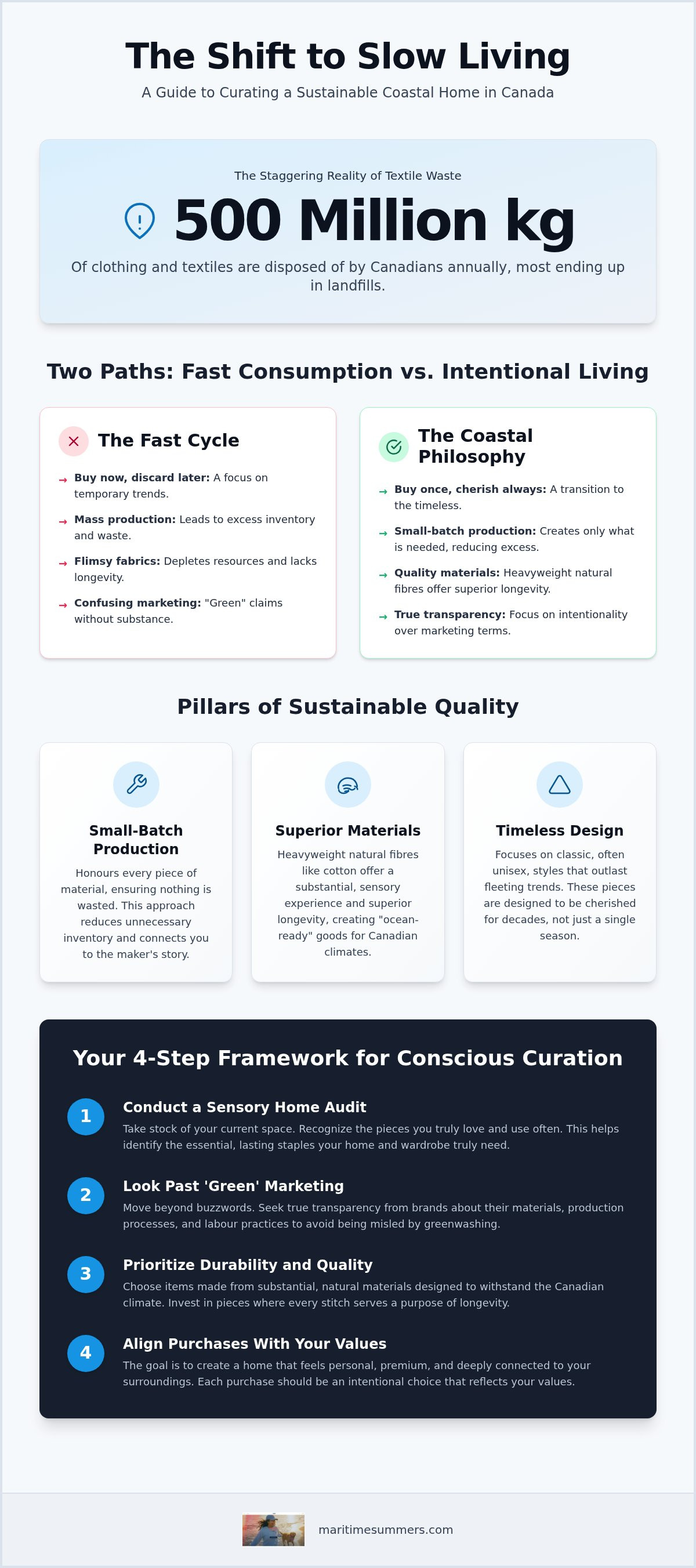
The pursuit of a zero-waste home is often a beautiful distraction from the reality of how we actually live. We've been told that sustainability is a destination, a perfect cabinet of glass jars and empty bins. Yet, Canadians dispose of nearly 500 million kilograms of clothing and fabric-containing home goods every year. It's a staggering weight. You likely feel the frustration of this cycle. You're searching for authentic sustainable coastal home goods in Canada but find only flimsy fabrics and confusing marketing.
You're looking for something deeper than a trend. We'll show you how to identify slow fashion and home goods that prioritize intentionality over excess. This isn't about buying more things to look "green." It's about the quiet rhythm of choosing quality that endures. We'll provide a framework to help you navigate new greenwashing legislation and build a home that aligns with your values. Discover how to curate a space where every item has a story, and nothing is meant to be thrown away.
Key Takeaways
- Shift from the frantic pace of modern consumption to a more intentional rhythm that values the "buy once, cherish always" coastal philosophy.
- Uncover the truth about minimal waste, focusing on how small-batch production prevents excess and honors the materials we use.
- Master a framework for identifying authentic sustainable coastal home goods in Canada by looking past marketing terms toward true transparency.
- Learn to conduct a sensory home audit to recognize pieces you truly love while identifying the essential staples needed for a lasting wardrobe.
- Align your shopping habits with your personal values to create a space that feels personal, premium, and deeply connected to your surroundings.
Understanding the Slow Fashion and Sustainable Home Movement
There is a specific kind of silence that exists on the coast. It is the sound of time slowing down. This stillness is the foundation of the slow fashion movement, a deliberate pause in the endless cycle of consumption that has come to define our modern lives. While the traditional retail world demands we buy now and discard later, the coastal philosophy invites us to buy once and cherish always. It is a transition from the temporary to the timeless.
Choosing sustainable coastal home goods Canada is about more than just aesthetics; it is about intentionality. Every stitch in a cotton knit and every curve of a ceramic mug should serve a purpose. In a world that produces millions of tonnes of waste, choosing to slow down is a quiet act of rebellion. It is the realization that our homes are not showrooms, but sanctuaries built to endure the passage of years.
The Shift from Fast to Meaningful
The environmental cost of the fast-paced fashion calendar is high. It leaves behind a trail of depleted resources and discarded fabrics. By choosing pieces made from heavyweight cotton, you are investing in a sensory experience that lighter, synthetic materials simply cannot replicate. The fabric feels substantial. It has a weight that suggests protection against a cool breeze. This shift toward quality has fuelled the rise of sustainable coastal apparel Canada, as more people seek out items that feel as good as they look.
- Small-batch production reduces unnecessary inventory.
- Heavyweight natural fibres offer superior longevity.
- Timeless designs outlast fleeting seasonal trends.
Why Canada is the Heart of the Slow Living Movement
The Canadian landscape demands a certain level of durability. Our weather is unpredictable; our coastal air is thick with salt and moisture. This environment naturally fosters a desire for "ocean-ready" goods that can withstand the elements without losing their soul. We call this the Atlantic state of mind. It is a national sentiment of grounding and home, where the things we own reflect the rugged beauty of the land we inhabit.
Slow fashion is the quiet recognition that a garment or a piece of decor carries the heartbeat of a specific place and the enduring presence of the home it inhabits. It is not about reaching a perfect zero-waste goal. Instead, it is about the sophisticated choice to surround yourself with sustainable coastal home goods Canada that tell a story of quality, tradition, and presence.
Myth-Busting: What Minimal Waste Fashion Really Looks Like
The term "zero waste" often feels like an impossible standard, a sterile goal that does not account for the messy, beautiful reality of coastal living. Minimal waste is not about achieving a mathematical zero. It is about a profound reduction in excess and a heightening of intention. True sustainability in sustainable coastal home goods Canada is found in the choice to create only what is needed, ensuring that every scrap of material is honoured rather than discarded. It is about moving away from the utilitarian and embracing pieces that feel premium and personal. Sustainable goods do not need to look "earthy" or unfinished; they should possess a quiet sophistication that allows them to age with grace.
Small Batch vs. Mass Production
Mass production follows a frantic, staccato heartbeat. Factories churn out thousands of identical items, many destined for a graveyard of unsold inventory in cold warehouses. In contrast, artisanal production moves with an unhurried rhythm. When a piece is made in small batches, you realize its true value before it even reaches your door. The wait becomes part of the story. The eventual unboxing feels like a cherished memory; a quiet moment of connection between the maker and the home. This slow approach ensures that every item is crafted with the expectation that it will last for decades, not just a single season.
The Reality of Textile Waste in Canada
The numbers are sobering. Canadians dispose of nearly 500 million kilograms of clothing and fabric-containing home goods annually. Much of this ends up in landfills, a silent testament to the "buy now, discard later" mentality. Organizations like the Canadian Circular Textiles Consortium are working to change this narrative, but the shift begins with the designer. By using thoughtful pattern-making, brands can save every scrap of fabric, turning potential waste into purposeful details.
Unisex designs also play a vital role in this cycle of reduction. When a heavyweight cotton sweater or a high-quality throw can be shared across a household, its lifecycle is naturally extended. These pieces are designed to survive the harsh, biting salt air of the coast. They become softer with every wash, grounding your space in a sense of tradition and permanence. You can find this same dedication to longevity in a curated selection of coastal home goods designed to resist the pull of the landfill. Every choice to buy better is a choice to protect the landscapes we love.
How to Evaluate Sustainable Coastal Home Goods in Canada
Identifying authentic sustainable coastal home goods Canada requires a discerning eye. It's no longer enough for a label to simply state "Made in Canada." You must look for the intention behind the object. Is the brand a curator of moments or just a volume seller? True intentionality is found in transparency. We want to know the journey of the fibre. We want to see the hands that shaped the garment. As the demand for ethical options continues to grow, a fact reflected in the Statistics Canada survey on environmental goods, discerning the "why" behind a brand becomes our most powerful tool. A storyteller values the legacy of the piece. A seller values the transaction. Look for brands that embrace a small-batch or made-to-order philosophy. This model ensures that resources are only used when a person truly desires the item, transforming you from a passive buyer into an active participant in the creation of your home.
The Fabric Test: Durability and Texture
High-quality knits reveal their soul through weight and texture. A heavyweight cotton isn't just about warmth; it's about structural integrity and a sense of permanence. When you hold a well-made piece, it should feel substantial in your hands. It should have a certain gravity. This is particularly vital for our climate. The biting salt air and persistent humidity of the coast require specific material choices like heavyweight cotton to ensure a piece doesn't lose its shape or thin out over time. By choosing ocean friendly fabrics for clothing, you ensure that your wardrobe respects the very ecosystems that inspire its design. Texture tells a story. A dense weave suggests a life lived outdoors, resistant to the elements and ready for the years ahead.
Timelessness over Seasonal Trends
The coastal aesthetic is inherently sustainable because it ignores the frantic ticking of the fashion clock. It is a style rooted in nostalgic warmth and the comfort of the familiar. It feels like home. When design prioritizes heritage over hype, the result is a collection of pieces that can be passed down through generations. These are the staples that survive the move from one house to the next. They are the items that gather stories. Look for simple, classic silhouettes that refuse to be dated by a specific year or a passing trend. A truly sustainable home is one where the decor doesn't need to be replaced every spring. It is a space that evolves slowly, anchored by quality and a connection to the land.
Practical Steps to Curating a Sustainable Coastal Space
Curating a space that reflects your values begins with a moment of stillness. Before searching for new sustainable coastal home goods Canada, conduct a thorough home audit. Open your closets. Touch the fabrics of your throws. Recognize the pieces that have already survived years of use and those that carry an emotional resonance. This process isn't about clearing everything out; it's about understanding the foundation of your surroundings. Most sustainability advice focuses on what to buy next, but true intentionality starts with acknowledging what you already own.
Once you've recognized what you cherish, identify the genuine "gap" pieces. These are the essential staples that anchor a home or wardrobe, such as relaxed fit knit sweaters that offer comfort during a damp morning. Investing in quality over quantity allows you to embrace a sense of quiet sophistication, where every item serves a purpose and feels premium. Finally, master the art of care. Our climate is demanding. Learning how to properly store and maintain your goods ensures they remain part of your story for a lifetime. Durability is a partnership between the maker and the keeper.
Organizing Your Capsule Wardrobe and Home
Centring your space around versatile, coastal-inspired pieces creates a sense of visual and emotional calm. Choose a colour palette that mirrors the shoreline. Think of the soft greys of weathered wood, the warm sands of a quiet beach, and the deep, shifting blues of the ocean. These tones are timeless. They allow different elements of your home and wardrobe to blend naturally. High-quality accessories, like structured caps or soft loungewear, provide daily comfort while maintaining an air of understated elegance. When your belongings share a common language of colour and texture, your home feels cohesive and unhurried.
The Art of Mending and Maintenance
Mending is an act of love. A small stitch in a favourite knit or a careful cleaning of a cotton throw isn't a chore; it's a way to honour the material's history. In Canada, salt air and high humidity can be harsh on natural fibres. Use breathable storage and avoid plastic bins that trap moisture. For those looking to build a foundation of durable pieces, exploring coastal loungewear sets Canada offers a practical look at how versatile layering can protect your core wardrobe from the shifting seasons. Maintenance is the bridge between a temporary purchase and a lifelong heirloom.
Take the first step toward a more intentional home by choosing pieces built for the long haul. Explore our collection of durable coastal essentials.
The Coast Approach: Intentionality and the Maritime State of Mind
Coast acts as a curator of moments. We believe in the unhurried day. This philosophy informs every product we create. It's a deliberate choice to slow down. When you explore sustainable coastal home goods Canada through our lens, you find pieces that carry the heartbeat of the coast. We don't just sell apparel; we share a connection to the Atlantic state of mind. Our goods are built for durability, using heavyweight cotton that resists the harsh salt air. It's about grounding yourself in your surroundings. We invite you to join a community that values the emotional weight of home and the stories we tell through the things we keep.
Thoughtfully Designed for Every Day
Every piece in our collection is crafted with sensory detail in mind. Think of the substantial, comforting weight of a Coast quarter-zip. Consider the intricate texture of a lobster-embroidered cap. These items are designed to be quiet companions during your most meaningful experiences. They aren't meant to be replaced. They're meant to age with you. We focus on the emotional "why" behind every stitch, prioritizing the feeling of a lifestyle over the utility of a product. It is a sophisticated, grounded approach to dressing that values tradition and the comfort of the familiar. Each piece is a quiet observation of a life lived well and slowly.
Bringing the Shoreline Home
The spirit of the coast shouldn't stop at your wardrobe. It should fill your home. Our selection of home goods and gifts is designed to bring that same sense of nostalgic warmth to every corner of your space. We prioritize quality that transcends the mere function of an object. A throw is more than a layer of warmth; it's a piece of the shoreline brought indoors. A gift is more than a gesture; it's a shared memory of a place you love. By choosing sustainable coastal home goods Canada that prioritize longevity, you align your shopping habits with a worldview that values presence and durability. We invite you to pause. We invite you to reflect.
Your home deserves pieces that tell a story of quality and intention. Explore our full collection of thoughtfully designed goods and discover the beauty of the unhurried maritime life.
Embracing the Unhurried Home
The journey toward a more intentional life isn't found in a perfect checklist. It's found in the quiet choice to surround yourself with pieces that carry weight and meaning. We've explored how small-batch production and heavyweight cotton are essential for the Canadian climate. These choices help reduce the staggering volume of textile waste while ensuring your belongings survive the salt air. Finding authentic sustainable coastal home goods Canada means looking for the story behind the stitch. It's about realizing that durability is the ultimate form of sustainability.
Your home is a sanctuary. It should be filled with items that ground you in the present moment and reflect the rugged beauty of the Atlantic state of mind. By choosing quality over quantity, you create a space that feels personal and premium. It's a return to a more thoughtful way of living, where every object is a cherished memory in the making. Let your home be a reflection of the landscapes you love and the values you hold dear.
Experience the unhurried rhythm of Coast: Shop our Sustainable Collection
Frequently Asked Questions
What is the difference between slow fashion and ethical fashion?
Slow fashion focuses on the unhurried rhythm of production and consumption, while ethical fashion prioritizes the human rights and working conditions of the makers. While they often walk hand in hand, slow fashion is specifically a response to the frantic pace of the traditional retail calendar. It invites you to value the longevity of a garment. Choosing pieces that are built to last ensures your wardrobe remains a collection of cherished memories.
Why are slow fashion brands in Canada more expensive than fast fashion?
Higher price points reflect an investment in durability and fair practices. Small-batch production in Canada means every item is crafted with intention rather than volume. Using premium materials, such as heavyweight cotton, ensures the piece can withstand the biting Atlantic breeze for years. When you choose quality over quantity, you are paying for the craftsmanship that prevents a garment from becoming part of the textile waste generated annually.
How can I tell if a brand is actually minimal waste?
Transparency is the most reliable signal of a minimal waste approach. Look for brands that utilize small-batch models to avoid overproduction and unsold inventory. Truly intentional brands often share details about their pattern-making processes or their choice of natural, long-lasting fibres. When evaluating sustainable coastal home goods Canada, check if the brand focuses on timeless designs that resist the pull of seasonal trends, as this naturally reduces waste.
Is it possible to have a minimal waste wardrobe on a budget?
Building a sustainable wardrobe on a budget is possible through the philosophy of the capsule collection. By investing in a few versatile, high-quality staples, you reduce the need for frequent, low-quality replacements. This "buy once, cherish always" mindset saves money over the long term. Focus on finding durable essentials that offer quiet sophistication and can be shared across a household, which naturally extends the lifecycle of every piece you own.
How does made-to-order clothing help the environment?
Made-to-order production is a powerful tool for environmental protection because it eliminates excess. This model ensures that a garment is only created when a person truly desires it, preventing the creation of unsold inventory that often ends up in landfills. It transforms the act of shopping into a shared moment between the maker and the keeper. This unhurried approach respects the materials used and honours the time required to create something of lasting value.
What fabrics should I look for in sustainable Canadian home goods?
Prioritize heavyweight natural fibres that can endure the unique demands of our climate. For sustainable coastal home goods Canada, heavyweight cotton is a superior choice because it maintains its structural integrity against salt air and humidity. You should also look for materials like linen or hemp that offer a rich, sensory texture. These fabrics age with grace, becoming softer with every wash while remaining a grounding presence in your home for many seasons.
Can slow fashion pieces be stylish and modern?
Slow fashion is inherently modern because it prioritizes timeless silhouettes over fleeting hype. These pieces offer a sense of quiet sophistication that feels relevant regardless of the current season. By focusing on nostalgic warmth and simple, elegant designs, slow fashion brands create "quiet companions" for your daily life. A well-made quarter-zip or a structured cap doesn't just look modern; it feels premium and personal, grounding your style in a sense of permanence.
How do I care for heavyweight cotton to make it last longer?
Longevity begins with gentle maintenance and an understanding of the material. Wash your heavyweight cotton pieces in cold water and air dry them whenever possible to preserve the integrity of the fibres. In coastal areas, high humidity can be a challenge, so use breathable storage rather than plastic bins. Mending a small tear is an act of love that honours the history of the piece, ensuring it remains a reliable staple in your home.