

What if your wardrobe was measured not by the fleeting seasons of a catalogue, but by the steady rhythm of the tides? It's a familiar heartache to watch a favourite sweater lose its shape after just one month of exposure to the salt air. We've all felt the disconnect of wearing mass-produced styles that feel more like a costume than a true reflection of the shoreline. You seek a deeper connection to the things you own. Moments that matter. Clothes that last. Embracing slow fashion for coastal living means choosing quality over quantity, and realizing that the most beautiful garments are those that carry the weight of a memory while standing up to the elements.
You want a wardrobe that feels like home, filled with high-quality pieces that can withstand the humidity and the persistent breeze. This guide will show you how to align your daily wear with the unhurried pace of the Atlantic through intentional and ethically made apparel. We'll look at the enduring nature of heavyweight knits, the soul of small-batch production, and the simple joy of curating a collection that truly belongs by the sea.
Key Takeaways
- Learn how to reject the cycle of disposable retail by embracing an intentional state of mind that values durability and presence.
- Discover why small-batch production and transparency are the essential pillars of slow fashion for coastal living.
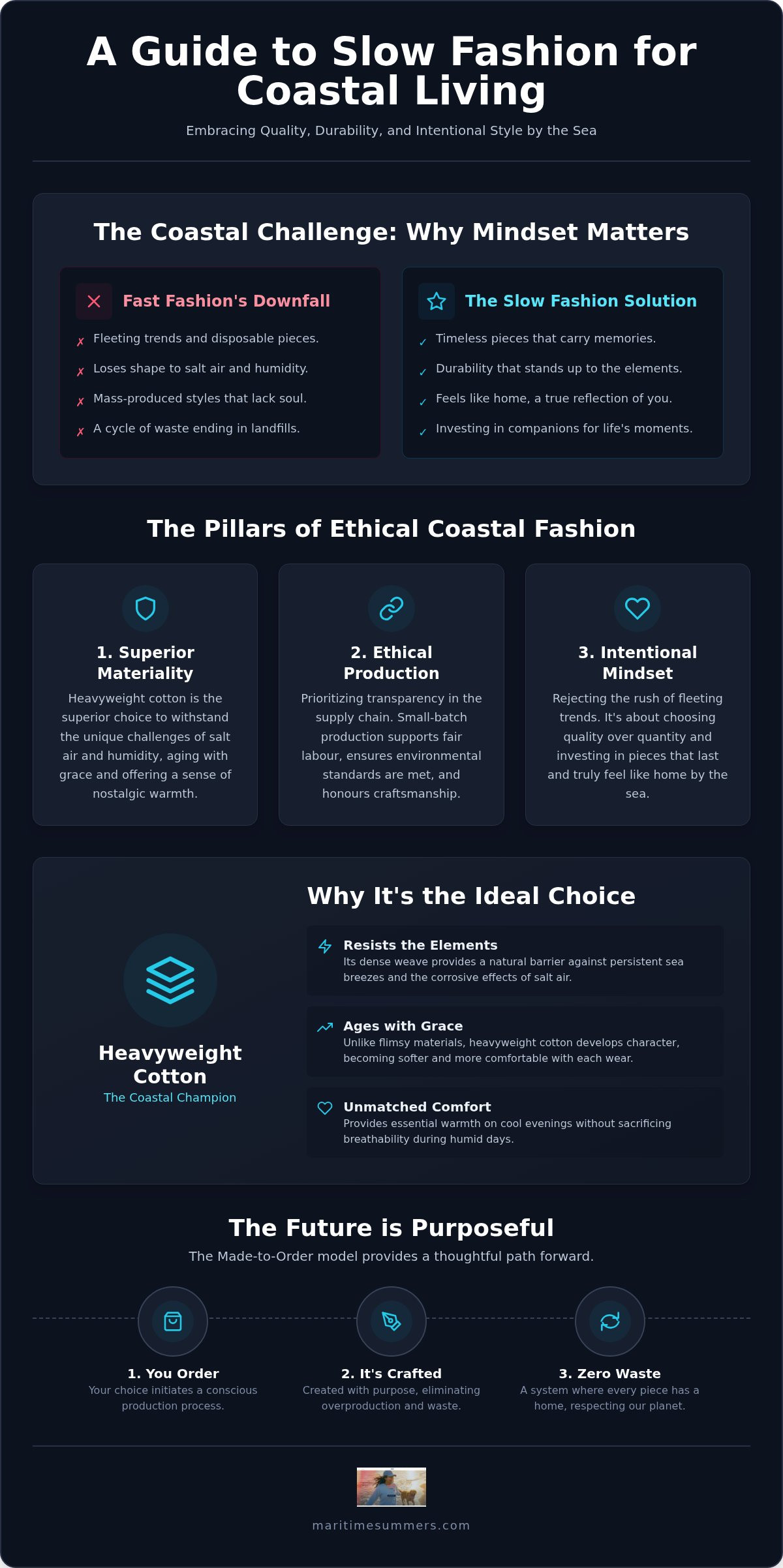
- Understand why heavyweight cotton is the superior choice for garments that need to withstand the unique challenges of salt air and humidity.
- Explore how to curate a versatile coastal capsule that prioritizes loungewear designed to transition effortlessly from the morning tide to the evening sofa.
- Realize how the made-to-order model provides a thoughtful path forward by eliminating waste and ensuring every piece is created with purpose.
Defining the "Slow" in Slow Fashion for Coastal Living
Ethical consumerism doesn't begin at the checkout. It starts with a pause. In a world that demands we move faster, the coast asks us to wait. To listen. Modern retail often feels like a frantic race toward the next trend, resulting in disposable pieces that lack soul. Embracing slow fashion for coastal living is about rejecting that rush. It's about finding an East Coast state of mind where intentionality is woven into every thread. This isn't just about what you wear; it's about how you choose to exist within your environment. It's about the quiet confidence of a well-loved sweatshirt or the way a cap feels after years of sun and sea spray. We aren't just buying clothes; we're investing in the companions of our most relaxed moments.
The coastal environment is unique. It's beautiful, but it's also demanding. The humidity and the salt require fabrics that don't just look good but perform under pressure. A slower approach to apparel means considering the source, the maker, and the longevity of every item. It's a realization that our choices have ripples, much like a stone dropped into a calm harbour. We choose to buy less, but buy better. We choose to honour the craftsmanship that goes into a heavyweight cotton knit. By slowing down, we move away from the disposable culture of fast fashion and toward a more meaningful connection with our belongings. This is the heart of the ethical guide: a return to things that matter.
The Rhythmic Pace of the Atlantic
The salt air is a harsh critic of poor quality. When the tide pulls back, it reveals a landscape that remains unchanged by time. This natural rhythm dictates a wardrobe that values quality over quantity. A wardrobe built on the principles of What is Slow Fashion? focuses on the entire lifecycle of a garment. It's a commitment to pieces that age with grace, mirroring the enduring strength of the shoreline.
Beyond the Nautical Cliché
Generic nautical styles often feel like a costume. Authentic slow fashion for coastal living requires something deeper. It's the heavyweight knit that offers a sense of nostalgic warmth on a cool evening. True style by the sea isn't about looking like a sailor; it's about feeling "at home" in your own skin. This approach values the emotional weight of a place and the comfort of a piece that has seen a thousand sunsets.
The Pillars of Ethical Consumerism in Fashion
Ethical consumerism is a bridge. It connects the quiet moments on the shoreline to the hands that crafted the fabric on your back. In a sea of mass production, choosing slow fashion for coastal living means looking for the human story behind the seams. It's a commitment to transparency and social impact. We prioritize people over profit margins. We value the time it takes to create something meant to last. This path requires us to move away from anonymous, disposable items and toward pieces that carry a sense of history and purpose. When we choose intentionally, we ensure our wardrobe reflects the same integrity we find in the natural world. It's about honouring the craft in every stitch.
Transparency in the Supply Chain
Knowing the origin of your clothing changes how you wear it. It's no longer just a garment; it's a narrative of ethical sourcing and fair labour. For the Canadian consumer, seeking out small-scale production offers a way to support local craftsmanship while ensuring environmental standards are met. You can often identify brands that align with these values by looking for guides on sustainable coastal apparel Canada. This clarity allows you to feel a deeper connection to your clothing, knowing that no part of its journey was hidden or exploitative. It's a shift from being a mere consumer to becoming a guardian of a legacy.
The Power of the Small-Batch Model
Small-batch production is an act of environmental respect. It's the antithesis of the clearance rack and the landfill cycle. By creating only what is needed, brands prevent the waste of excess inventory. There is an artisanal value in limited-run collections. Perhaps it's a specific colour or a unique embroidery detail that won't be repeated. This scarcity isn't a marketing tactic; it's a deliberate choice to reduce volume. It ensures that every item, from thoughtfully made coastal loungewear to heavyweight knits, is produced with focused attention. When you own a small-batch piece, you own a moment that was never rushed. You carry the quiet care of the maker with you through every coastal breeze.
Intentional design also plays a vital role in waste reduction. By choosing materials for their longevity, we prevent garments from falling apart after a single season of salt air. Understanding the sustainable properties of cotton helps us realize why certain fabrics are chosen for their durability and biodegradable nature. It's about building a collection that stands up to the elements while remaining gentle on the earth. Each choice is a step toward a future where fashion and nature exist in harmony. We believe that the clothes you love should be as enduring as the coastline itself.
Materiality: Why Heavyweight Cotton Wins for Coastal Weather
The shoreline is a demanding place. It asks for more than just aesthetics; it asks for resilience. When we talk about slow fashion for coastal living, materiality is the foundation. Salt air is abrasive. Humidity is persistent. While thin, synthetic blends from fast-fashion retailers often sag under the weight of the morning mist, premium natural fibres maintain their structure. There is a deep, sensory appeal in "thick" fabrics. It's the feeling of a sturdy hug on a cool night. Heavyweight cotton provides a barrier against the damp breeze while remaining soft against the skin, offering a level of comfort that plastic-based synthetics simply cannot replicate. It's a choice that respects both the wearer and the environment.
Durability as a Form of Sustainability
We often think of sustainability in terms of labels, but the most ethical garment is the one that stays in your closet the longest. If a piece lasts ten years instead of one, its environmental footprint is decimated. Heavyweight cotton offers a rare balance of breathability and insulation, making it ideal for the shifting temperatures of the Atlantic coast. It doesn't pill or thin out after a few washes. Instead, it softens and evolves, becoming a record of the seasons you've spent by the water. Durability is the ultimate metric of an ethical purchase.
Heavyweight vs. Lightweight: A Coastal Comparison
Choosing the right weight is a matter of both utility and atmospheric style. A substantial piece, like a heavy knit or a lobster embroidered denim hat, is a better investment than thin, mass-produced cotton. Texture plays a vital role in creating a premium coastal aesthetic. It suggests a life lived with intention. The following table illustrates why weight matters for the long-term lifecycle of your wardrobe.
| Feature | Heavyweight Cotton | Lightweight Synthetics |
|---|---|---|
| Durability | High; stands up to years of salt air | Low; tends to lose shape quickly |
| Weather Resistance | Resists wind and manages humidity | Becomes clingy and cold when damp |
| Texture | Substantial, soft, and nostalgic | Thin, smooth, and often feels "cheap" |
| Lifecycle | Biodegradable and long-lasting | Contributes to microplastic waste |
Investing in weight is an investment in presence. It's about realizing that the clothes we wear should be as enduring as the cliffs and the tides. By prioritizing these premium natural fibres, we move away from the "costume" of nautical wear and toward an authentic lifestyle. We choose pieces that feel like home, no matter how hard the wind blows.
Curating Your Coastal Wardrobe with Intent
Building a wardrobe that feels like home is an exercise in restraint. It is about the "Coastal Capsule." A few versatile pieces that layer effortlessly. We prioritize loungewear that moves with us. From the damp morning sand to the warmth of the evening sofa. These are pieces that don't demand attention but offer constant comfort. Unisex fits and relaxed silhouettes are essential here. They allow for movement. They allow for the layering needed when the Atlantic breeze turns sharp. It's about longevity. A garment that fits a changing body or can be shared between loved ones is a garment that stays out of the landfill. This intentionality extends to others, too. When looking for sustainable coastal gifts Canada, we choose items that carry the same weight of purpose.
The Art of the Layer
The weather on the coast is never static. It shifts with the tide. This makes the quarter-zip and the heavyweight hoodie the true uniform of the shoreline. We mix textures to create depth. A denim cap paired with a thick cotton knit. Soft loungewear under a structured shell. Our palette is drawn from the world around us. The grey of weathered driftwood. The muted greens of sea glass. The soft, bruised purples of a North Atlantic sunset. These colours don't clash; they harmonize. Explore our collection of ethically made coastal apparel to start your own capsule.
Caring for Your Coastal Pieces
To embrace slow fashion for coastal living is to become a steward of your clothing. Salt air and humidity are part of the life we love, but they require a specific kind of care. We follow a "wash less, wear more" philosophy. It's better for the fabric and the planet. Spot cleaning is often enough for a heavyweight knit that has only seen a light breeze. When you do wash, choose cold water and gentle cycles. Air drying is essential to maintain the structure of premium cotton and prevent the shrinking that heat can cause. Store your garments in a dry, ventilated space. A little care ensures your favourite pieces remain soft and sturdy for years to come. By treating our clothes with respect, we honour the resources and the people that brought them into being.
The Future of Fashion: Made-to-Order as the Ultimate Solution
The tide doesn't rush. Neither should our choices. In the traditional world of retail, thousands of garments are produced with the hope that someone might buy them. This often leads to the "clearance rack" and, eventually, the landfill. By shifting toward a made-to-order model, we choose a different path. We create only what is already loved. Only what is wanted. This approach is the ultimate expression of slow fashion for coastal living. It ensures that every thread serves a purpose and every garment finds a home. There is a quiet, emotional reward in waiting for something crafted specifically for you. It's a return to a time when things were made with a name in mind, rather than a sales target. Coast acts as your soulful guide in this journey, offering a way to dress that respects the rhythm of the world around us.
Zero Waste, Maximum Meaning
Ocean conservation begins with industrial restraint. When we eliminate overproduction, we directly reduce the waste that threatens our coastlines. This model is the most honest expression of ethical consumerism. It's a commitment to zero waste. The "slow" process of making matches the "slow" lifestyle of the shore. It invites you to pause. To reflect. To anticipate. When your piece finally arrives, it carries more than just the weight of the fabric; it carries the meaning of an intentional choice. You aren't just wearing a hoodie or a cap. You're wearing a philosophy of stewardship.
- Reduced Footprint: No excess inventory means less energy used and fewer resources wasted.
- Quality Focus: Each piece receives individual attention, ensuring it meets the durability standards of the Atlantic air.
- Personal Connection: Knowing your garment was made for you creates a lasting bond that discourages disposability.
Bringing the Shoreline Home
The East Coast state of mind isn't something you leave at the door. It's an atmosphere you carry with you. It's a feeling of nostalgia and warmth that should fill every corner of your life. While your wardrobe reflects this intentionality, your living space can too. Integrating beach inspired home decor allows you to create a sanctuary that mirrors the serenity of the coast. It's about bringing the shoreline home in every sense. Whether it's the weight of a heavy knit on your shoulders or the soft textures in your living room, every element should feel like a cherished memory.
We invite you to explore a more meaningful way of living. One where quality is non-negotiable and every purchase is a reflection of your values. Visit Coast to discover our collection of ethically made apparel and home goods. Let's build a future where fashion is as enduring and beautiful as the sea itself.
A Legacy Woven by the Sea
The shoreline teaches us that the most enduring things aren't built in a day. They are shaped by time, patience, and the steady push of the tide. Choosing slow fashion for coastal living is a commitment to this same unhurried wisdom. It's about realizing that a heavyweight cotton knit, designed to withstand the sharp Atlantic breeze, is more than just apparel. It's a companion for the moments that matter. By prioritizing small-batch production and made-to-order intentionality, we move away from the noise of disposable trends and toward a wardrobe that feels like home.
Nostalgic, sensory-driven Canadian design isn't just about utility. It's about the emotional weight of a place. It's the warmth of a favourite memory and the strength of a garment that ages with grace. We invite you to step away from the rush and find comfort in pieces that respect both the maker and the environment. Explore our collection of thoughtfully designed coastal apparel and begin building a collection that reflects your values. The coast is waiting. Let's walk toward a more soulful way of dressing, one intentional choice at a time.
Frequently Asked Questions
What is the difference between slow fashion and sustainable fashion?
Sustainable fashion focuses on the materials and the footprint we leave on the earth. Slow fashion is a commitment to the pace and the lifecycle of the garment itself. It's a rejection of the frantic retail cycle. By choosing slow fashion, you prioritize the human story behind the seams. It's about buying less and cherishing more. This philosophy ensures that every piece in your wardrobe carries the weight of intention.
Why is heavyweight cotton better for coastal living than lightweight fabrics?
The weight of the fabric acts as a shield against the abrasive nature of salt air. Thin fabrics often sag or pill when exposed to high humidity. Heavyweight cotton maintains its structure and offers a necessary barrier against the damp Atlantic breeze. It provides a sense of warmth and security during cool seaside mornings. This durability ensures your favourite pieces can withstand the elements for many seasons to come.
How does the made-to-order model help the environment?
This model eliminates the industrial waste associated with overproduction. By creating only what is already loved and wanted, we prevent unsold inventory from reaching the landfill. It's a zero-waste strategy that respects the earth's resources. No excess energy is spent on garments that don't have a home. This intentional process aligns production with actual human desire, ensuring every thread serves a meaningful purpose in someone's life.
Is ethical fashion always more expensive than fast fashion?
The initial cost of ethical apparel is often higher than mass-produced items, but the long-term value is far greater. Fast fashion is designed to be replaced. Embracing slow fashion for coastal living means choosing pieces designed to be repaired and remembered. When a garment lasts for years instead of weeks, the cost per wear drops significantly. It's a shift in perspective. You are investing in a legacy rather than a temporary trend.
How can I tell if a coastal brand is truly ethical or just greenwashing?
Look for radical transparency regarding their makers and production methods. A truly ethical brand will share the story of their small-batch process rather than using vague buzzwords. Avoid companies that launch a single "eco-friendly" collection while continuing to mass-produce thousands of other items. Check for a consistent commitment to durability and fair labour practices. Honesty is found in the details of the supply chain, not just the marketing adjectives.
What are the essential pieces for a coastal capsule wardrobe in Canada?
A versatile capsule starts with foundational items that balance utility with a sense of place. These essentials are designed to layer as the weather shifts.
- A heavyweight cotton hoodie for sharp breezes.
- A durable denim cap to shield from the sun and salt.
- Relaxed loungewear for transitioning from the shore to the sofa.
- A structured quarter-zip for effortless evening layers.
Can slow fashion pieces still be stylish and modern?
Ethical pieces are often more stylish because they avoid the generic look of mass-market trends. Choosing slow fashion for coastal living allows you to focus on timeless silhouettes and premium textures. A relaxed fit or a thoughtful embroidery detail offers a sense of quiet sophistication. These garments don't scream for attention. They provide a grounded, personal aesthetic that remains relevant long after the current season has faded away.
How do I care for my heavyweight coastal apparel to make it last?
Longevity starts with a gentle touch and a "wash less" philosophy. Use cold water and avoid the harsh heat of a dryer to preserve the natural fibres. Air drying helps maintain the structure of the cotton. Because these pieces are built for durability, spot cleaning often suffices for minor marks. By treating your clothing with respect, you honour the resources and the hands that crafted them. Quality thrives under quiet care.