

Imagine standing on a weathered dock as the Atlantic mist settles on your shoulders; it's a moment of pure connection with the rhythmic pull of the tide. You want the clothes you wear to feel like a part of this landscape, not a threat to its delicate balance. Yet, the quiet worry remains that a favourite fleece might be shedding invisible microplastics into the water. Finding genuine ocean friendly fabrics for clothing in Canada can feel overwhelming when you're faced with greenwashing and complex labels that often hide the truth.
We believe your attire should be a quiet haven of comfort and ethics. You deserve a wardrobe that balances premium quality with a deep, soulful respect for our marine ecosystems. This guide will show you how to embrace natural fibres and slow fashion practices that keep our Atlantic waters clear while you stay comfortable in the salt-kissed breeze. We will explore a curated list of ocean-safe materials, share practical tips for reducing pollution, and help you build a timeless collection that truly honours the spirit of the shore.
Key Takeaways
- Understand the hidden impact of synthetic materials and why choosing biodegradable fibres is a vital step for protecting our Atlantic coastlines.
- Identify the most durable ocean friendly fabrics for clothing, focusing on how natural materials like heavyweight cotton provide warmth without shedding microplastics.
- Discover the environmental value of small-batch and made-to-order production models that prioritize intentionality over the waste of mass production.
- Learn mindful laundry rituals that extend the life of your favourite pieces while keeping harmful pollutants out of the sea.
- Find out how to curate a premium coastal wardrobe that feels deeply personal and aligns with a slower, more ethical way of living.
The Hidden Connection: How Our Wardrobe Touches the Tide
The ocean does not begin at the shoreline. It begins in our homes, in our laundry rooms, and in the very threads we pull over our heads each morning. To live with an East Coast state of mind is to recognize that our lives are inextricably linked to the pulse of the Atlantic. Ocean conservation clothing represents a deliberate choice to honour this bond. These are garments crafted with the singular intention of minimizing marine pollution and ecological harm. It is about ensuring that what we wear today does not become the debris of tomorrow.
A garment's life is a story. It starts with the first stitch and, ideally, ends with a quiet return to the earth. When we choose ocean friendly fabrics for clothing, we are choosing a narrative of respect. We are moving away from the frantic pace of disposable trends and toward a more intentional, coastal way of being. This shift is not just about utility; it is about the emotional resonance of wearing materials that truly belong in the natural world. Investing in quality pieces allows us to build a wardrobe that feels both premium and deeply personal.
Understanding the Microplastic Problem
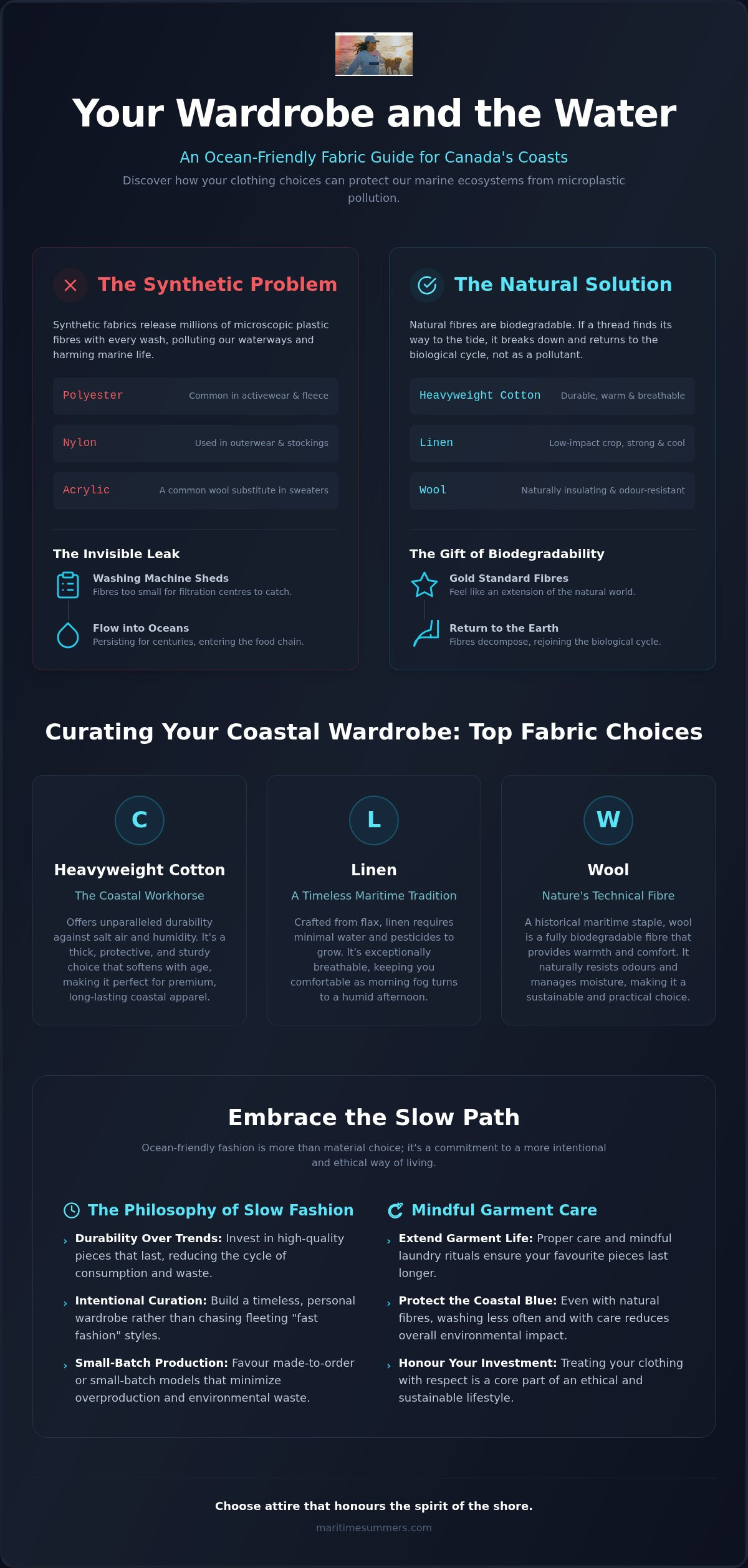
Every time a synthetic garment is washed, it sheds. Polyester, nylon, and acrylic fabrics release millions of microscopic plastic shards into our water systems. These fibres are too small for most filtration centres to catch. They flow directly into our oceans, where they persist for centuries. In Canadian waters, these particles are found in everything from tiny plankton to the majestic whales that grace our horizons. Microplastics are the primary reason to avoid synthetic blends. By choosing natural alternatives, we stop this invisible leak at its source.
The Philosophy of Ocean-Friendly Fashion
The broader movement of Sustainable fashion teaches us that true sophistication is found in simplicity and durability. There is a quiet power in a heavyweight cotton hoodie that softens with age rather than thinning out. It feels like a shared memory; a piece of clothing that carries the scent of salt air and the warmth of a bonfire. This is the essence of slow fashion. It is a commitment to environmental stewardship that feels deeply personal. We transition from being mere consumers to being curators of a life well-lived. We choose pieces that reflect the permanence of the sea rather than the fleeting nature of the "fast" fashion cycle. By selecting ocean friendly fabrics for clothing, we align our daily rituals with the preservation of the waters we love.
Natural Fibres and the Gift of Biodegradability
Nature provides the most sophisticated solutions for the shore. While synthetics often feel like a thin, plastic barrier against the world, natural fibres feel like an extension of it. They possess the rare gift of biodegradability. If a thread from a cotton shirt finds its way to the tide, it does not linger as a ghost for centuries. It breaks down. It returns to the biological cycle. This inherent grace is why natural materials are the gold standard for ocean friendly fabrics for clothing. They represent a life lived in harmony with the water rather than in opposition to it.
We must consider the weight of our choices. Research from the NOAA highlights the persistent nature of microplastic fibers from synthetic clothing, which remain in the ecosystem long after a garment is discarded. In contrast, wool and cotton are biological. They are meant to rejoin the earth. There is a specific tactile joy in wearing earth-derived materials. Synthetics often feel like a suffocation of the skin, trapping humidity and heat in an artificial embrace. Natural fibres breathe. They move with you. They allow the coastal air to circulate, keeping you comfortable even as the morning fog turns into a humid afternoon.
Heavyweight Cotton: The Coastal Workhorse
Heavyweight cotton is the quiet hero of the Atlantic. It offers a unique durability that stands up to the abrasive salt air and constant humidity. It is thick. It is protective. It feels like a sturdy embrace. When grown responsibly, premium cotton supports the health of both the soil and the sea. For those seeking sustainable coastal apparel Canada offers thoughtful options that prioritize these natural strengths. You can find these durable, earth-conscious staples within our collection at Maritime Summers.
Linen and Wool: Timeless Maritime Traditions
Linen and wool carry the weight of maritime tradition. Flax-based linen requires minimal water and few pesticides to thrive, making it inherently ocean-friendly. It is crisp, cool, and grows softer with every wash. Wool is a renewable insulator, a gift from the land that keeps the damp chill at bay without contributing to plastic pollution. These fibres are the foundation of a timeless relaxed fit knit sweater. Such pieces are designed to last for generations, echoing the permanence of the sea itself.
The Weight of Intention: Beyond the Fibre
Sustainability is a quiet conversation between the maker and the wearer. It is a promise that a garment was born from necessity rather than a spreadsheet. While we have discussed the importance of natural materials, the volume of production is equally vital. Even the most carefully sourced ocean friendly fabrics for clothing can become a burden if they are produced in excess. True coastal protection requires us to look beyond the fibre and into the heart of how our clothes are brought into being. Fewer pieces. Deeper meaning. A life lived with purpose.
Mass manufacturing often creates what we might call "ghost waste." These are the thousands of unsold pieces that never find a home, eventually drifting into landfills or polluting our coastlines. By moving toward a model of intentionality, we ensure that every stitch has a purpose. We begin to value the story of the garment as much as its utility. Choosing ocean friendly fabrics for clothing is a beautiful start, but the way those fabrics are treated during production defines their true impact. It is about the soft, muted colours of a natural cotton hoodie that was made just for you.
Small Batch Production vs. Mass Manufacturing
Small batch production is a return to artisanal roots. It is a rejection of the frantic pace that defines modern fashion. Limited runs prevent the massive accumulation of textile waste that so often ends up in our waters. There is a tangible quality difference in these pieces. They feel more substantial. They carry the mark of careful hands. In this quiet space, intentionality acts as the ultimate antidote to textile pollution. It is a way to honour the craftsman and the environment in a single, shared breath.
Made-to-Order: A Zero-Waste Coastal Future
The most respectful way to create is to wait. Made-to-order production represents a zero-waste future for our shores. By only creating a garment when a heart desires it, we eliminate the need for vast warehouses and the chemical runoff associated with mass storage. It reduces our carbon footprint and honours the resources used. This approach encourages a slower, more meditative way to explore coastal loungewear sets Canada. When we look for textile sustainability certifications, we should also look for the makers who value the rhythm of the tide over the rush of the market.
Caring for Your Garments to Protect the Coastal Blue
The life of a garment doesn't end at the purchase; it truly begins with the ritual of care. When we choose ocean friendly fabrics for clothing, we take on a quiet responsibility to preserve their integrity and the waters they inhabit. Every wash is a point of contact between our private lives and the vast Atlantic. By adopting mindful laundry practices, we help mitigate the staggering 92,000 tonnes of microfibre pollution generated by the textile industry annually. It's a slow, methodical process that honours the durability of the fibres and the health of the tide.
Cold water is a gentle friend to both the ocean and your wardrobe. Heat can stress natural fibres, causing them to break down prematurely and release more particles into the water system. Using cold cycles preserves the deep, nostalgic colours of your favourite pieces while significantly reducing energy consumption. Pair this with natural, plant-based detergents to ensure that no harsh chemicals flow back into the coastal ecosystems. There's a profound sense of peace in knowing your laundry routine leaves no trace behind.
The Ocean-Friendly Laundry Routine
- Step 1: Use microfibre filter bags for any remaining synthetic blends in your collection to catch stray plastic bits before they reach the sea.
- Step 2: Wash less frequently. Often, a day spent in the crisp salt air is enough to naturally refresh your heavyweight cotton knits.
- Step 3: Choose line-drying whenever possible. It saves energy and prevents the fibre stress caused by the mechanical heat of a dryer.
Preserving the Quality of Natural Fibres
Coastal living presents unique challenges, particularly the persistent humidity that can settle into thick materials. To protect your heavyweight cotton and wool, ensure they're completely dry before storing them in a cool, well-ventilated space. Proper storage prevents the need for frequent replacements, reinforcing the emotional weight of a piece kept for a lifetime. A well-loved sweater, mended and revived over the years, carries more beauty than anything new. You can find these enduring, high-quality staples to begin your own journey of care at Maritime Summers.
Choosing the Slow Path: The Coast Philosophy of Apparel
Living in tune with the tides requires a certain stillness. It is a choice to honour the rhythm of the Atlantic in every small act, including the way we dress. Integrating ocean conservation into our daily rituals doesn't have to feel like a burden. Instead, it can be a quiet celebration of the environment that sustains us. By choosing ocean friendly fabrics for clothing, we align our personal style with the enduring strength of the coast. This is the heart of our philosophy. We believe in pieces that are made with intention, designed to weather the years alongside you.
Our commitment is rooted in the tangible. We prioritize heavyweight fabrics that offer a sense of permanence and nostalgic designs that evoke the warmth of a shared memory. By focusing on small batches and a made-to-order model, we ensure that nothing is created without a purpose. This approach respects the sea by refusing to contribute to the cycle of overproduction. Our embroidered caps and soft loungewear are more than just apparel. They are reflections of a deep, soulful connection to the shoreline, crafted to be kept, loved, and eventually returned to the earth without harm.
Crafted for the Atlantic State of Mind
Heritage is a powerful anchor. Our lobster embroidered denim hat is a perfect example of this. It celebrates the traditions of the East Coast while utilizing materials that respect the marine environment. Durability is our greatest tool in reducing consumption. When a garment is built to last, the need for constant replacement fades away. There is a profound beauty in a wardrobe that respects the tides, growing more personal with every salt-stained adventure and every sunset watched from a weathered porch.
Your Next Steps Toward a Mindful Wardrobe
The journey toward a more sustainable lifestyle often begins with a quiet observation. Take a moment to evaluate your current closet. Look for the hidden plastics in synthetic blends that may still be lingering. Moving forward, consider investing in pieces that tell a story of home and heritage. We invite you to explore a more intentional way of coastal living through our curated collections. By choosing ocean friendly fabrics for clothing and supporting slow production, you become a part of a movement that values the health of our waters as much as the comfort of our homes.
Embracing the Rhythm of a More Mindful Shore
The Atlantic coast teaches us that everything is connected. Every thread we wear eventually meets the water. By choosing ocean friendly fabrics for clothing, you're making a quiet promise to protect the blue spaces that offer us so much peace. We've explored how natural fibres like heavyweight cotton biodegrade gracefully and how mindful laundry rituals can stem the tide of microplastic pollution. It is a journey of returning to what is real and what is lasting.
True sustainability is found in slowing down. It's found in the weight of a well-made hoodie and the knowledge that it was crafted with intention. Our commitment to small-batch and made-to-order production in Canada ensures your wardrobe remains a sanctuary of quality, not a source of waste. These pieces are crafted from premium, durable natural fibres. They're designed for a lifetime of coastal memories, growing softer with every season spent by the sea. Explore our collection of intentional, ocean-friendly coastal apparel and discover the beauty of dressing with purpose. Let your wardrobe be a soulful reflection of the landscape you love.
Frequently Asked Questions
What are the best ocean-friendly fabrics for everyday clothing?
The most reliable ocean friendly fabrics for clothing are natural, biodegradable materials such as heavyweight cotton, linen, and wool. These fibres don't shed persistent microplastics into our waterways; instead, they break down naturally if they ever reach the sea. Choosing high-quality, 100 percent natural cotton provides a sturdy and breathable alternative to synthetics. It's a choice that respects the delicate balance of our Atlantic ecosystems while offering a premium, comfortable feel for daily coastal life.
How do synthetic fabrics like polyester harm the ocean?
Synthetic fabrics shed millions of microscopic plastic fibres during every wash cycle. These microfibres are often too small for standard filtration systems to capture. They flow directly into the sea, where they persist for centuries. In 2026, it's estimated that over 58,000 tonnes of these particles leak into the environment annually. This plastic accumulation disrupts marine food chains and affects the health of Canadian aquatic life, from the smallest plankton to the largest whales.
Can organic cotton really help with ocean conservation?
Organic cotton is a powerful tool for ocean health because it eliminates the use of toxic synthetic pesticides and fertilizers. These chemicals often leach into groundwater and eventually reach our oceans. Organic farming practices can also reduce water consumption by up to 91 percent compared to conventional methods. By looking for GOTS 8.0 certified organic cotton, you ensure the garment meets strict environmental criteria that protect both the soil and the tide from harmful chemical runoff.
What is the most sustainable way to wash clothes to protect the sea?
Washing your clothes in cold water is an effective way to reduce fibre shedding and energy use. Heat weakens fabric structures, causing more microfibres to break off during the cycle. You should also consider washing your garments less frequently. Often, hanging a heavyweight cotton hoodie in the fresh salt air is enough to naturally refresh it. For any remaining synthetic blends, using a specialized laundry bag helps capture loose fibres before they exit the machine.
Is recycled polyester actually ocean-friendly?
While recycled polyester (rPET) uses 59 percent less energy to produce than virgin polyester, it's not entirely ocean-friendly. It still sheds the same microfibre particles during washing and doesn't biodegrade at the end of its life. It's a better choice for items that aren't washed often, like caps or heavy outerwear. However, for everyday apparel that touches the skin, choosing natural ocean friendly fabrics for clothing remains the superior choice for long-term marine protection and ecological harmony.
How does small-batch clothing production benefit the environment?
Small-batch and made-to-order models directly combat the massive textile waste inherent in fast fashion. By creating only what is needed, we avoid the "ghost waste" of unsold inventory that often ends up in landfills. This intentional approach reduces the chemical runoff and carbon footprint associated with mass manufacturing and warehouse storage. It allows for a deeper focus on durability and craftsmanship, ensuring each piece is a meaningful addition to your wardrobe that stays out of the waste stream.
What should I look for on a clothing label to ensure it is ocean-safe?
Look for labels that specify 100 percent natural fibres like organic cotton, linen, or wool. Avoid blends containing polyester, nylon, or acrylic whenever possible. Trusted certifications like GOTS 8.0 or OEKO-TEX Standard 100 indicate that the garment has been tested for harmful substances. Under new 2026 regulations, these labels provide essential traceability, ensuring your clothing meets high standards of ecological performance before it ever reaches your home for a life by the sea.
How can I make my coastal wardrobe last longer in salty air?
Protecting your wardrobe from the abrasive salt air begins with proper storage and gentle care. If a garment becomes heavily misted with salt spray, a light rinse in fresh, cold water can prevent the salt from breaking down the fibres over time. Ensure your heavyweight cotton pieces are completely dry before storing them in a cool, ventilated space. This prevents humidity from settling in, preserving the nostalgic warmth and durability of your favourite knits for many years of coastal memories.