

You reach for your favourite hoodie, the one that feels like a heavy hug against the Atlantic breeze, only to find it's become stiff and tight. It's a quiet heartbreak. That perfect, relaxed fit you once cherished has vanished in the heat of a dryer. We understand the frustration of watching a premium investment lose its softness or develop that lingering damp smell after a long day on the line. You bought these pieces to last. They deserve a care routine that honours their craftsmanship.
Mastering heavyweight cotton care instructions is less about chores and more about a ritual of preservation. It's a way to ensure your coastal wardrobe remains as comfortable as the day you first pulled it on. In this guide, we'll share the essential steps to keep your fabrics soft, prevent pilling, and maintain that intentional silhouette. We'll explore the science of why thick cotton behaves differently and how to dry your garments so they stay fresh, supple, and ready for your next quiet moment by the water.
Key Takeaways
- Protect the deep colours and soft surface of your garments by always washing them inside out in cold water.
- Master essential heavyweight cotton care instructions by drying your pieces flat to prevent gravity from pulling them out of shape.
- Learn the art of reshaping or "blocking" your apparel while damp to ensure the original relaxed fit remains constant.
- Discover how to care for your wardrobe in coastal climates, from removing salt spray to preventing mildew in humid air.
- Adopt a philosophy of longevity that transforms garment maintenance into a meaningful ritual of sustainability and respect.
Understanding the Weight of Quality: What is Heavyweight Cotton?
There's a quiet comfort in the physical weight of a garment. It feels like a shield against the salt-tinged air of the Atlantic. It feels like a promise. When we discuss heavyweight cotton, we're talking about more than just thickness; we're describing a textile built for endurance and the slow passage of time. These pieces possess a structural integrity that fast-fashion alternatives lack. They don't just sit on the body. They drape with intention.
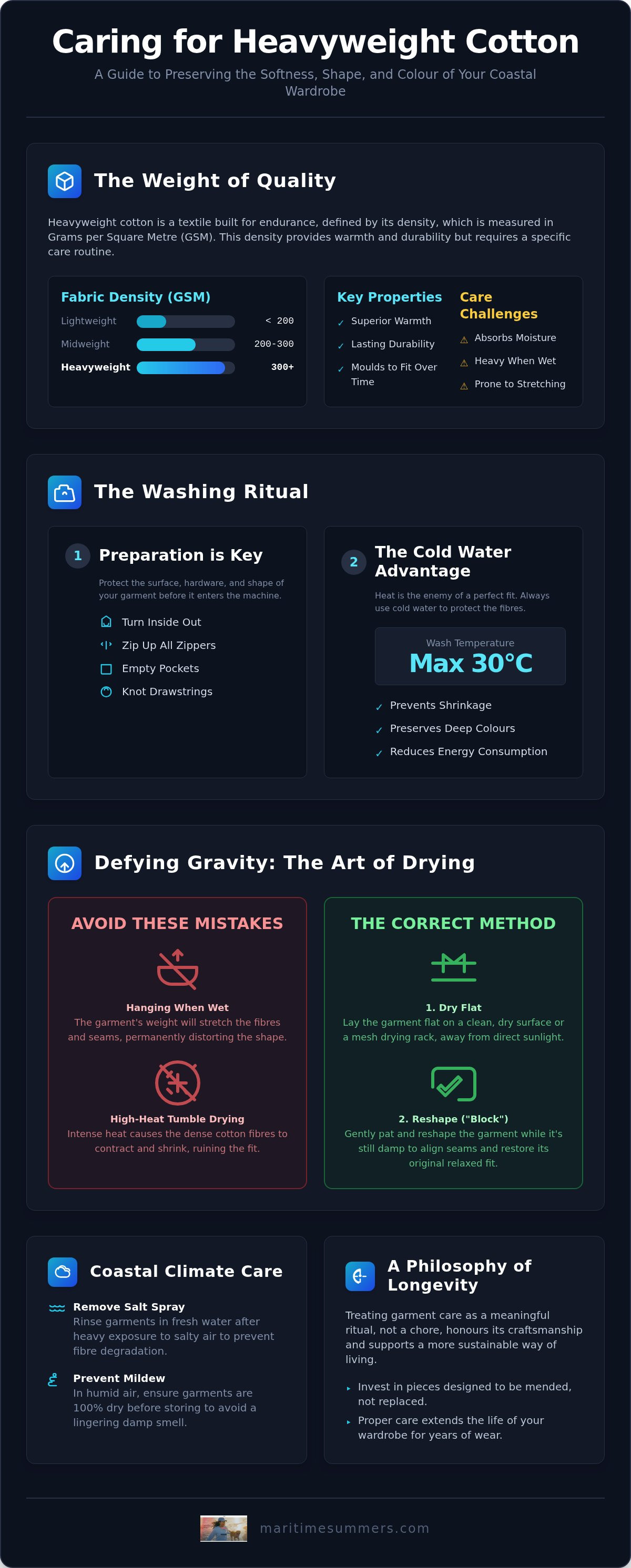
Grams per Square Metre (GSM) is the industry standard for measuring fabric density and durability. In the world of premium apparel, a heavyweight classification typically starts at 300 GSM and can reach well over 450 GSM. This density creates the warmth and "break-in" period familiar to lovers of heritage clothing. Much like a sturdy pair of leather boots, a heavyweight pullover softens and moulds to your frame over the years, becoming a personal archive of every coastal trek and quiet morning by the fire.
However, this density brings unique challenges. Because the fibres are so tightly packed, they act as a sponge for moisture and odours. Following specific heavyweight cotton care instructions is vital because these garments take longer to breathe and release what they've absorbed. Without the right ritual, the very thickness that provides warmth can become a liability, trapping dampness and losing that pristine, soft-to-the-touch finish.
The Science of the Heavyweight Knit
The strength of these garments lies in the density of the knit. A tight, heavy pattern creates a natural barrier against the wind, retaining body heat without the need for synthetic liners. Many premium pieces utilize combed cotton, where the shortest, weakest fibres are removed before spinning. This process results in a smoother surface and higher tensile strength. It's this commitment to quality that makes these items a cornerstone of sustainable coastal apparel Canada, as they're designed to be mended and kept rather than discarded after a single season.
Why Weight Dictates Your Care Routine
Weight changes the physics of the wash. When a 400 GSM hoodie is submerged, it can triple in weight, becoming a heavy, sodden anchor that pulls at its own seams. This leads to "fabric fatigue," a state where the cotton fibres are stretched beyond their ability to recover. Understanding general laundry and fabric care reveals that heavyweight cotton requires a gentler touch. You aren't just washing a shirt; you're managing a significant mass of organic material. If you treat it with the same haste as a lightweight tee, you risk permanent distortion of the relaxed fit you love. Proper heavyweight cotton care instructions prioritize patience, ensuring the fabric's memory remains intact for a lifetime of wear.
The Washing Ritual: Steps to Cleanse Without Compromise
Washing your favourite layers shouldn't feel like a chore. It's a quiet moment. A reset. To keep that thick, coastal texture intact, you must approach the machine with intention. Unlike lighter fabrics, heavyweight cotton requires a specific sequence to avoid the common pitfalls of pilling or fading. Following these heavyweight cotton care instructions ensures your garments emerge with their soul intact, ready for another season of use.
Pre-Wash Preparation and Turning
Before the water even touches the fabric, the work begins. Turn every item inside out. This simple act protects the outer face of the cotton from the mechanical friction of the wash cycle. It's especially vital for protecting the intricate details and vibrant prints on coastal graphic tees Canada, keeping the artwork crisp and the surface smooth for years to come.
- Zip up quarter-zips and hoodies. Exposed metal teeth can snag the knit of other items in the load.
- Check pockets for beach treasures. A single pebble or bit of sea glass can wreak havoc on your machine's drum.
- Secure any drawstrings with a loose knot to prevent them from tangling or being pulled out of the hood.
The Cold Water Advantage
Heat is the enemy of the perfect fit. High temperatures cause the tightly coiled fibres of heavyweight cotton to contract, leading to the dreaded shrinkage that ruins a premium garment. To maintain the "relaxed fit" that defines coastal style, keep your water temperature at a maximum of 30°C. Cold water is a gentle choice. It preserves the deep, moody colours of forest green and navy that mirror the Atlantic, preventing the "bleeding" that can dull a garment's richness. Washing in cold isn't just about the clothes. It's about a slower, more conscious way of living that reduces energy consumption and aligns with the principles of ethical fashion.
Choose your soaps wisely. Harsh powders can sometimes fail to dissolve in cold water, leaving behind a chalky residue in the dense weave of a hoodie. Opt for a gentle, pH-neutral liquid detergent instead. When selecting a cycle, aim for a "delicate" or "normal" setting with a medium spin. You need enough movement to rinse away salt and sand, but not so much that the garment is stretched out of shape. These heavyweight cotton care instructions are designed to balance cleanliness with structural respect.
Once you've mastered the wash, you'll find these pieces only get better with age. If you're looking to add another durable layer to your collection, you can explore our latest coastal silhouettes. Taking the time to care for what you own is the first step toward a truly sustainable wardrobe.
Drying and Reshaping: Defying Gravity to Preserve Form
Once the wash cycle ends, your garment is at its most vulnerable. A wet, heavyweight hoodie is significantly heavier than a dry one. It's a sodden, heavy mass of organic material. At this moment, gravity is no longer a friend; it becomes a force that can pull at the very architecture of the knit. If you don't handle this stage with care, you risk undoing all the effort you put into a gentle wash.
Following proper heavyweight cotton care instructions means strictly avoiding the tumble dryer. High heat is a blunt instrument. It bakes the cotton fibres. It makes them brittle and prone to shrinking. Most importantly, it steals the soft, "broken-in" feel you've worked so hard to achieve through wear. Instead, embrace the slow dry. It's a quiet exercise in patience that pays dividends in the longevity of your wardrobe.
The Dangers of the Hanger
Visualise a wet hoodie on a plastic hanger. The weight of the water focuses all its pressure on two small points at the shoulders. This creates "shoulder bumps," permanent distortions in the fabric that no amount of ironing can truly fix. The neckline stretches. The sleeves grow longer. You lose the intentional, boxy silhouette that defines the style. For heavyweight pieces, hanging to dry is an invitation for the garment to grow out of its original proportions.
Mastering the Air-Dry Indoors and Out
To speed up the process without heat, use the towel roll method. Lay your garment on a clean, dry towel. Roll it up like a sleeping bag and press firmly to absorb the initial deluge of water. This removes the bulk of the moisture without the violent agitation of a high-speed spin cycle. Then, unroll it and lay it flat on a drying rack. This is where you "block" the garment. Use your hands to smooth out wrinkles and pat the seams back into their original alignment. You're essentially reminding the cotton of its intended shape before it sets.
Proper airflow is essential to prevent the musty scent that can plague thick fabrics. If you're drying a heavyweight coastal hoodie Canada style indoors, ensure a window is cracked or a fan is nearby. Flip the item every few hours. This ensures both sides dry evenly and the fabric remains supple rather than stiff. This ritual of flipping and smoothing ensures your cotton stays fresh and keeps its soul intact for years to come.
Living by the sea is a sensory gift. The rhythm of the tide, the scent of the salt air, and the fine mist that clings to the skin create a beautiful backdrop for a life well-lived. But for your wardrobe, the coast is a demanding environment. The elements are persistent. They find their way into the dense weave of your favourite layers, requiring a more nuanced approach than standard heavyweight cotton care instructions might suggest. To preserve the soul of your apparel, you must learn to work with the climate, not against it.
Adopting a "less is more" philosophy is the kindest thing you can do for your cotton. You don't need to wash your hoodie after every bonfire or beach walk. In fact, you shouldn't. Every trip through the machine is a form of stress. Instead, embrace the art of the refresh. Hang your garment in a well-ventilated space, away from direct sunlight, to let the fibres breathe. If you encounter a spot of soot or a splash of coffee, treat the area locally with a damp, soft cloth and a drop of gentle soap. This preserves the fabric's natural oils and prevents unnecessary wear.
Neutralizing Salt and Sand
Sand is more than a nuisance; it is an abrasive force. Tiny grains can lodge themselves deep within the knit of your sustainable loungewear canada, acting like microscopic sandpaper that grinds against the fibres with every movement. To combat this, use a soft-bristled garment brush once the piece is dry. A few gentle strokes can lift away debris before it settles. Salt air can dehydrate cotton fibres, making them brittle over time. A light steam every few months can help restore the moisture balance without a full immersion wash, keeping the cotton supple and resilient.
Storage Rituals for the Off-Season
When the seasons shift and the heavy pullovers are tucked away, how you store them matters as much as how you wash them. Proper storage is a final, vital chapter in your heavyweight cotton care instructions. Folding is always superior to hanging. The weight of a 450 GSM garment will eventually win the battle against a hanger, leading to the fabric fatigue that distorts the shoulders and neckline. Place your folded items in a cool, dry spot to ensure they maintain their shape.
Avoid plastic bins or bags that trap humidity, as these are breeding grounds for mildew in coastal homes. Instead, opt for breathable cotton storage bags that allow for air circulation. To keep your collection smelling like a cherished summer memory, use cedar blocks or dried lavender sachets. These natural deterrents protect your pieces from moths without the clinical scent of chemicals. Taking these extra steps ensures that when the first autumn chill arrives, your layers are ready to welcome you back. If you're looking for pieces built to endure these very conditions, you can view our collection of coastal essentials designed for the Atlantic life.
The Philosophy of Longevity: Investing in Ethical Apparel Canada
There's a profound, quiet beauty in a garment that has weathered the years alongside you. It's more than just fabric. It's a repository of memories. When you invest in ethical apparel canada, you aren't just buying a product. You're entering into a long-term relationship with a piece of craftsmanship. This commitment to the life of the piece is the ultimate expression of sustainability. By following intentional heavyweight cotton care instructions, you ensure that your favourite layers don't just last; they evolve.
The relationship between garment weight and durability is a cornerstone of the "Cost Per Wear" metric. A 450 GSM hoodie might require a higher initial investment, but its lifespan far outpaces lighter, mass-produced alternatives. Over five or ten years, the cost of that single, cherished item becomes negligible compared to the environmental and financial toll of replacing fast-fashion pieces every season. It's a choice to value quality over quantity. It's a decision that mirrors the resilience of the coast itself.
Slow Fashion as a Coastal Value
The unhurried pace of maritime living naturally lends itself to the philosophy of slow fashion. Just as we wait for the tide to turn or the fog to lift, we should embrace an unhurried approach to caring for our clothes. Small-batch production ensures that every seam and stitch meets a higher standard of quality from the very beginning. This initial excellence, when paired with mindful heavyweight cotton care instructions, allows a hoodie to become a heritage piece. It becomes something that can be passed down, carrying the scent of the sea and the warmth of a thousand sunsets to the next generation.
Maintaining Your Maritime Accessories
Care extends beyond the large pullovers to the smaller essentials that complete the coastal silhouette. For instance, keeping a lobster embroidered denim hat looking timeless requires a similar touch of gentleness. Avoid the washing machine for structured headwear; instead, spot clean with a soft brush and cool water to maintain the integrity of the embroidery. These accessories protect us from the biting Atlantic wind; they deserve our respect in return. Ultimately, the act of caring for what we love is meditative. It grounds us in the present moment. It reminds us that the things we choose to keep are the things that truly matter.
Honouring Your Coastal Layers
Caring for your wardrobe is a way of honouring your memories. It's a slow, rhythmic process that mirrors the Atlantic tides. You've learned that cold water is a sanctuary for deep colours and that flat-drying is the only way to protect the architecture of a heavy knit. These rituals transform a simple garment into a lifelong companion. By integrating these heavyweight cotton care instructions into your home life, you're choosing a path of quality and presence.
Our pieces are built for this very endurance. We use premium 400gsm+ cotton and small-batch designs to ensure every hoodie and tee can withstand the ocean weather. They're crafted for those who value an Atlantic state of mind and the quiet joy of things that last. We invite you to explore our collection of ethically made heavyweight apparel and find a piece that will grow softer with every passing season. Wear it well, care for it deeply, and let it tell your story for years to come.
Frequently Asked Questions
How do I stop my heavyweight cotton hoodie from shrinking in the wash?
Wash in cold water and never use a tumble dryer. Heat causes the dense, natural fibres to contract, which is why keeping the temperature below 30°C is essential for your wardrobe. Turning the garment inside out also helps maintain the structural integrity of the knit. When you follow these specific heavyweight cotton care instructions, you protect the intentional, relaxed fit from becoming tight and distorted during the drying process.
Is it better to hand wash or machine wash thick cotton sweatshirts?
Machine washing on a delicate cycle is perfectly acceptable if you use a gentle liquid detergent. While hand washing is the most cautious approach, the sheer weight of a 400 GSM sweatshirt makes it difficult to rinse thoroughly by hand. A modern machine's "delicate" or "hand wash" setting provides the consistent, gentle agitation needed to cleanse the fibres without causing undue stress or the risk of permanent fabric fatigue.
Why does my cotton feel stiff after air drying, and how can I fix it?
Stiffness often occurs because of residual minerals in the water or too much detergent trapped in the weave. To restore softness, give your damp garment a vigorous "snap" or shake before laying it flat to dry. This simple movement breaks the surface tension of the fibres. You can also add a splash of white vinegar to the final rinse cycle to help dissolve any lingering soap deposits naturally and effectively.
Can I use a tumble dryer on the "low heat" setting for heavyweight cotton?
It's best to avoid the tumble dryer entirely, even on a low heat setting. Even minimal heat can be unpredictable with dense cotton, potentially causing uneven shrinkage or damaging the soft surface texture. Air drying is a slower, more mindful ritual that ensures your premium pieces remain supple. If you're in a hurry, use a fan to increase airflow in a cool room rather than resorting to the dryer's mechanical heat.
How often should I wash my heavyweight cotton graphic tees?
Wash your tees only when they are truly soiled or begin to lose their freshness. Over-washing is the primary cause of fading and pilling in high-quality cotton. For most coastal activities, a quick spot clean or a few hours of airing out in a breeze is sufficient. Reducing the frequency of full wash cycles is a core part of effective heavyweight cotton care instructions and helps preserve the artwork.
What is the best way to remove salt stains from dark cotton fabric?
Rinse the affected area with cool, fresh water as soon as possible. Salt air can dehydrate cotton, leaving behind white, crusty traces that can eventually weaken the fibres. For persistent stains, a mixture of one part white vinegar to three parts water can be gently dabbed onto the fabric. Always rinse again with fresh water and dry flat to ensure the deep navy or forest green hues remain rich and even.
How do I fix a heavyweight hoodie that has stretched out from hanging?
You can often restore the shape by re-wetting the garment and drying it flat. Submerge the hoodie in cool water to allow the fibres to relax and reset. After removing excess moisture with the towel-roll method, carefully "block" the piece on a flat surface. Pat the seams and neckline back into their original positions. As the cotton dries, the fibres will contract slightly, returning the garment to its intended coastal silhouette.
Should I use fabric softener on 100% heavyweight cotton?
No, you should generally avoid synthetic fabric softeners. These products work by coating the cotton fibres in a thin layer of chemicals, which can reduce the natural breathability and moisture-wicking properties of the material. Over time, this buildup can make the fabric feel greasy or flat. For a natural alternative that keeps your clothes feeling fresh, try adding a half-cup of baking soda to the wash cycle to soften the water instead.